
An efficient warehouse layout is the foundation of productive operations. Whether a facility is brand new or operating in an existing footprint, layout decisions directly impact labor efficiency, storage capacity, safety, and scalability.
This guide walks through the core principles of warehouse layout planning, common mistakes to avoid, and how to design a layout that supports both current operations and future growth.
Why Warehouse Layout Matters More Than Ever
As supply chains become faster and more complex, warehouses are expected to:
- Handle higher order volumes
- Store more SKUs
- Reduce pick times
- Improve safety
- Adapt to changing product mixes
A poorly planned layout leads to:
- Congested aisles
- Excess travel time
- Underutilized vertical space
- Increased labor costs
- Difficulty scaling as demand grows
A well-planned layout does the opposite — it improves flow, reduces handling, and extends the life of the facility.
Start With Product Flow, Not Storage
One of the most common mistakes in warehouse design is starting with racking before understanding how product moves through the building.
Key questions to answer first:
- Where does product enter the facility?
- Where does it exit?
- How often is it touched?
- Which SKUs move fastest?
Designing around inbound → storage → picking → outbound flow minimizes backtracking and unnecessary handling.
Zoning the Warehouse for Efficiency
Effective layouts divide the warehouse into functional zones:
Receiving
- Located near inbound docks
- Requires clear staging space
- Often underestimated in size
Storage
- Pallet racking, bulk floor storage, or shelving
- Should be matched to pallet sizes, weights, and turnover rates
Picking & Order Assembly
- Positioned close to outbound docks
- High-velocity SKUs should be closest to pick paths
Shipping
- Needs room for consolidation and staging
- Bottlenecks here quickly impact service levels
Clear zoning improves visibility, safety, and productivity.
Aisle Widths and Equipment Compatibility
Aisle design must align with:
- Forklift type (sit-down, reach truck, turret truck)
- Load dimensions
- Pick frequency
Common Aisle Types
- Wide aisle: Flexible, easy to operate, lower density
- Narrow aisle: Higher density, requires specialized equipment
- Very narrow aisle (VNA): Maximum density, higher equipment and planning costs
Choosing the right aisle strategy balances space utilization and operational speed.
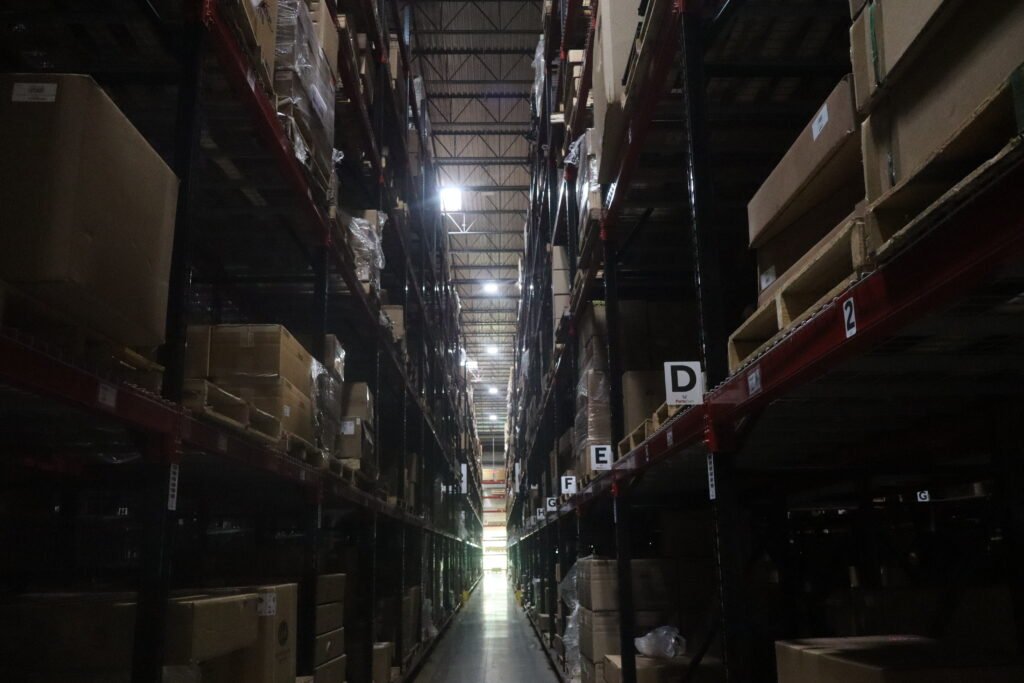
Using Vertical Space Effectively
Many warehouses run out of floor space long before they use all available height.
Vertical storage planning includes:
- Rack height selection
- Beam spacing based on pallet heights
- Fire code and sprinkler clearance
- Equipment lift capabilities
Using vertical space effectively can add 30–50% more pallet positions without expanding the building.
This can dramatically increase the efficiency and productivity of your warehouse from the moment your racking is added
Planning for Capacity and Growth
A layout that only works for today quickly becomes a problem.
Smart layout planning considers:
- Future SKU growth
- Heavier pallets or different pallet sizes
- Changes in order profiles
- Automation or conveyor integration
- Reconfigurable racking systems
Building flexibility into the layout avoids costly rework later.
Safety and Accessibility Considerations
Efficiency should never compromise safety.
Good layouts account for:
- Clear travel paths
- Proper rack protection
- Adequate turning radius
- Visibility at intersections
- Separation of pedestrian and forklift traffic
A safer layout reduces damage, downtime, and liability.
Common Warehouse Layout Mistakes
Avoid these frequent issues:
- Oversized receiving or shipping areas at the expense of storage
- Aisles too narrow for actual equipment
- Ignoring pallet overhang and load clearances
- Designing without future expansion in mind
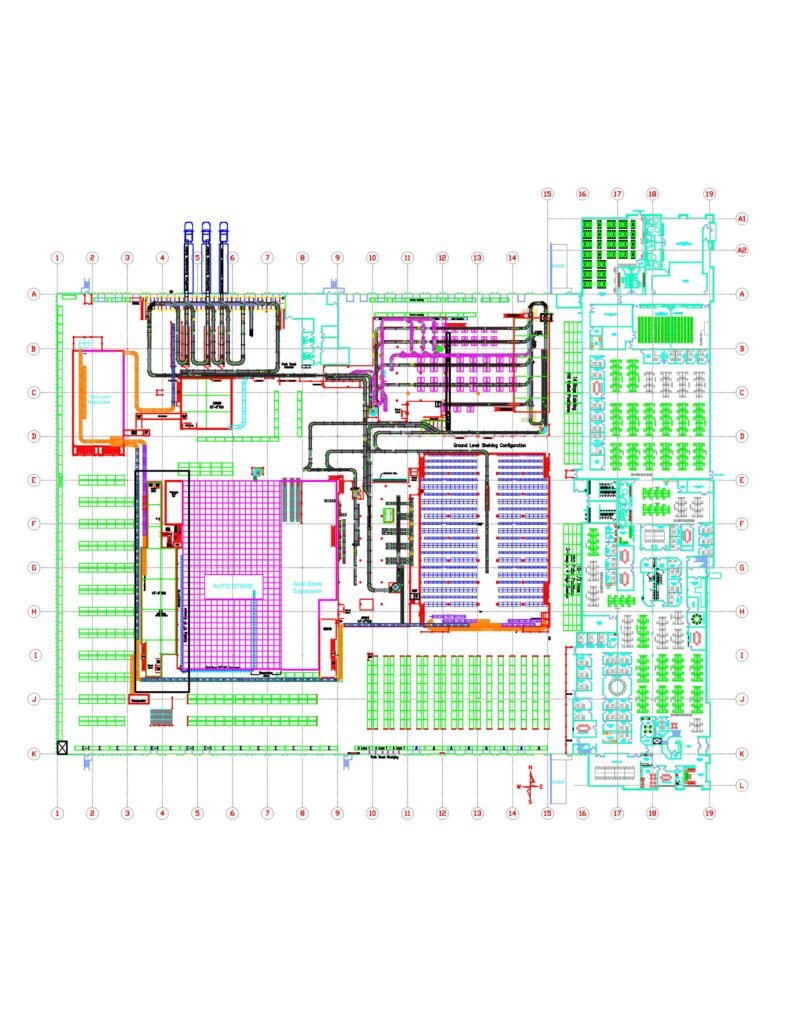
- Copying another facility’s layout without considering operational differences
Every warehouse is unique — layouts should be designed accordingly.
Final Thoughts
Warehouse layout planning is not just a design exercise — it’s a strategic operational decision. The right layout improves throughput, lowers operating costs, and supports long-term growth.
Whether expanding, relocating, or reconfiguring an existing space, investing time in proper warehouse layout planning pays dividends for years to come.