
Pallets are one of the most fundamental — and most overlooked — components of material handling. Nearly every warehouse operation depends on pallets to move, store, and ship product, yet many facilities give little thought to how pallet selection impacts safety, storage density, equipment wear, and long-term operating cos
Selecting the right pallet type isn’t just a logistics decision. It affects pallet racking performance, forklift efficiency, automation compatibility, and even employee safety. This guide breaks down common pallet types, their ideal uses, and the key factors warehouses should consider when selecting pallets.
Why Pallet Selection Matters
The pallet you choose influences far more than transportation. It directly impacts:
- Pallet racking load ratings and beam spacing
- Forklift handling and stability
- Product damage and returns
- Warehouse cleanliness and safety
- Compatibility with conveyors and automation
- Long-term cost per trip, not just upfront cost
Using the wrong pallet can result in:
- Rack damage due to inconsistent pallet dimensions
- Unstable loads in high-bay storage
- Increased forklift wear and operator fatigue
- Higher replacement and disposal costs
Choosing the right pallet helps create a safer, more efficient, and more predictable operation.
Common Pallet Types and Their Best Uses
Wood Pallets
Overview
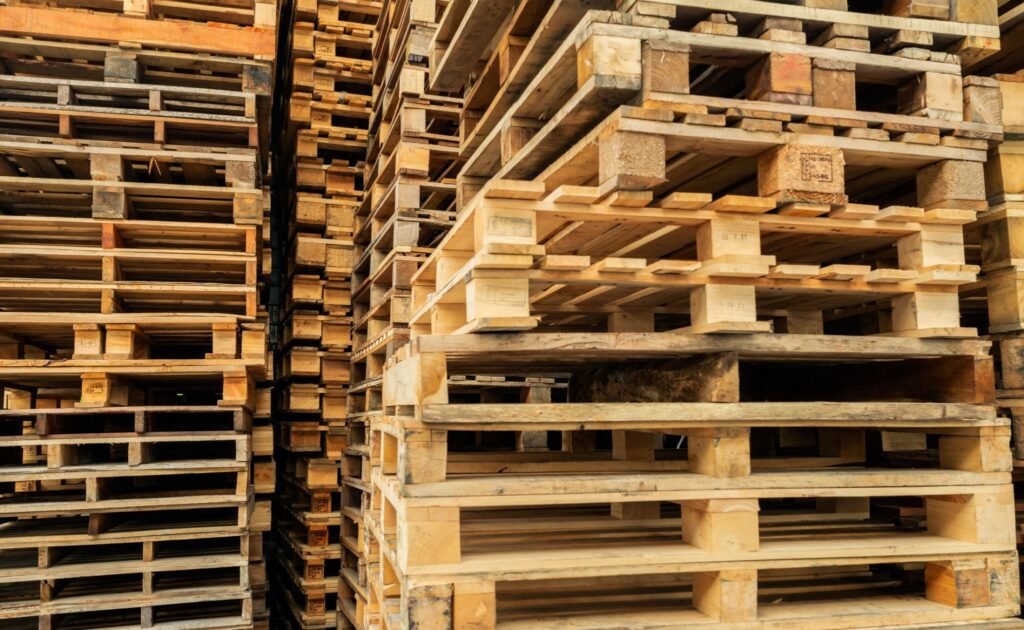
Wood pallets are the most widely used pallet type in warehousing and distribution. They are readily available and cost-effective for many applications.
Best Uses
- General warehousing
- One-way shipping
- Heavy but stable loads
- Operations prioritizing low upfront cost
Advantages
- Low initial cost
- Easy to source and repair
- Suitable for a wide range of industries
Considerations
- Inconsistent dimensions between pallets
- Broken boards can create safety issues in racking
- Susceptible to moisture, pests, and splintering
Wood pallets can perform well in selective pallet racking systems, but damaged pallets should be removed quickly to avoid rack and product damage.
Plastic Pallets
Overview
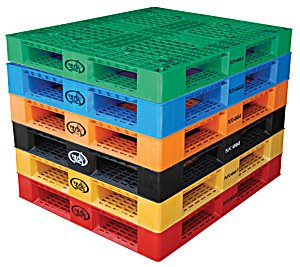
Plastic pallets provide uniform dimensions and consistent performance, making them increasingly popular in modern warehouse environments.
Best Uses
- Food and beverage distribution
- Pharmaceutical and cleanroom environments
- Automated storage and retrieval systems (AS/RS)
- Conveyor-based operations
Advantages
- Consistent size and weight
- Resistant to moisture and chemicals
- Longer lifespan than wood pallets
- Reduced risk of contamination
Considerations
- Higher upfront investment
- Can become slippery if not properly designed
- Not all plastic pallets are suitable for heavy point loads
Plastic pallets are often preferred in automated systems where consistency and reliability are critical.
Metal Pallets
Overview
Metal pallets are designed for heavy-duty industrial applications where strength and durability are critical.
Best Uses
- Manufacturing environments
- Heavy or high-value products
- High-temperature or harsh conditions
- Long-term closed-loop systems
Advantages
- Extremely high load capacity
- Long service life
- Minimal deflection under heavy loads
Considerations
- Higher initial cost
- Heavier than wood or plastic
- Requires compatible forklifts and handling equipment
Metal pallets are typically used in specialized applications where pallet failure is not an option.
Pallet Size and Standardization
While 40” x 48” pallets are the industry standard in North America, not all operations use standard sizes.
Non-standard pallets can:
- Reduce pallet racking efficiency
- Limit beam length options
- Increase handling complexity
- Create compatibility issues with forklifts and conveyors
Standardizing pallet sizes improves:
- Storage density
- Racking layout efficiency
- Equipment compatibility
- Safety and predictability
When possible, aligning pallet size with racking design leads to better space utilization and fewer operational issues.
Load Capacity and Pallet Strength
Not all pallets are created equal, even within the same material category.
Key capacity considerations include:
- Static load (pallet sitting on the floor)
- Dynamic load (pallet being moved)
- Racking load (pallet supported by rack beams)
Using pallets not rated for racking can cause:
- Pallet deflection
- Product instability
- Rack damage over time
Always confirm pallet load ratings match:
- Product weight
- Storage method
- Racking system design
Pallets and Pallet Racking Compatibility
Pallet selection should be made alongside pallet racking decisions — not separately.
Important compatibility factors:
- Pallet overhang on beams
- Pallet stringer or deck board configuration
- Beam spacing and load distribution
- Pallet condition over time
Damaged or inconsistent pallets can compromise even the best racking system.
Pallets in Conveyor and Automated Systems
Automation places stricter demands on pallets.
Conveyor-friendly pallets typically require:
- Consistent dimensions
- Flat, uniform bottoms
- Minimal gaps or protrusions
Plastic pallets are often preferred in automated environments, but not all designs are conveyor-compatible.
Before implementing automation, pallet selection should be reviewed carefully to avoid costly retrofits.
Cost Considerations: Upfront vs Long-Term
The cheapest pallet upfront is not always the most cost-effective over time.
When evaluating cost, consider:
- Replacement frequency
- Repair costs
- Product damage
- Downtime caused by pallet failure
- Impact on racking and equipment
Total cost of ownership often favors pallets with higher durability and consistency, especially in high-volume operations.
Final Thoughts
Pallets may seem simple, but they play a critical role in material handling efficiency, safety, and scalability. Choosing the right pallet type requires balancing cost, capacity, durability, and compatibility with your warehouse systems.
Taking a strategic approach to pallet selection helps protect your racking investment, improve workflow, and support long-term operational success.