
Pallet racking is one of the most critical infrastructure investments in any warehouse or industrial facility. While pallet size and available floor space often drive early decisions, true efficiency and safety come from selecting the right racking sizes and capacities for your operation.
This guide explores pallet racking dimensions, load capacities, vertical spacing, and real-world applications, helping warehouse managers and operations leaders make informed, scalable choices.
Why Pallet Racking Size and Capacity Matter
Choosing pallet racking isn’t just about fitting product into a building. The wrong configuration can lead to:
- Underutilized vertical space
- Bottlenecks in picking and replenishment
- Increased product damage
- Safety hazards and rack failures
- Costly reconfiguration during future growth
Properly sized and rated pallet racking supports:
- Higher storage density
- Safer forklift operation
- Faster throughput
- Long-term operational flexibility
Upright Frame Heights and Load Ratings
Common Upright Heights
- 8–12 feet
- 14–20 feet
- 22–30+ feet (high-bay applications)
While taller racks increase pallet positions, height must align with load capacity and building constraints.
Capacity Considerations
Uprights are rated for:
- Maximum load per frame
- Load per pallet position
- Seismic and impact resistance
Best practices:
- Heavier loads require larger upright columns
- Taller racks increase load stress at the base
- Fire codes and sprinkler clearance often limit usable height
Typical applications:
- Low height / high capacity: Manufacturing inputs, heavy materials
- Tall / moderate capacity: Distribution centers with uniform pallet weights
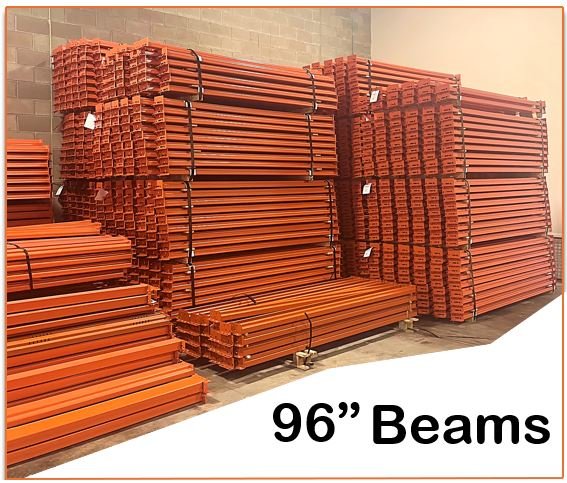
Beam Lengths, Capacities, and Their Uses
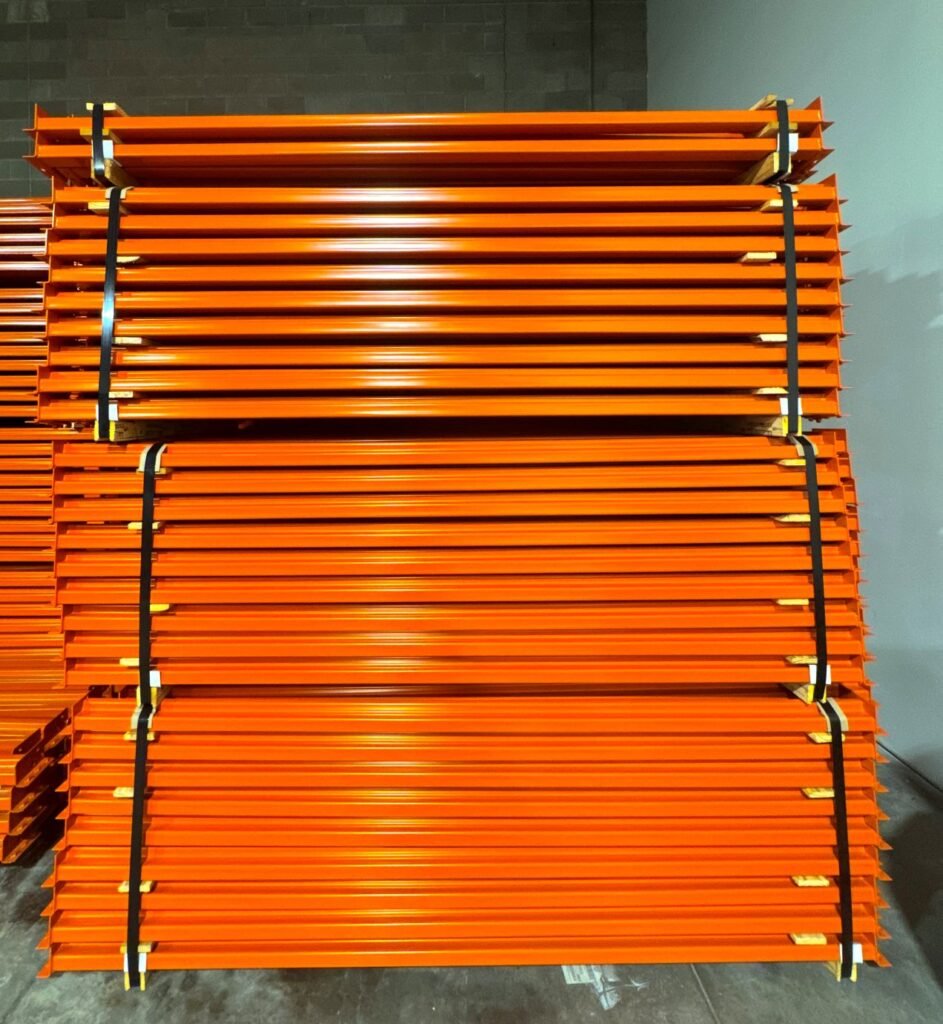
Beam length directly impacts how many pallets per level and the load per beam.
8-Foot Beams
- Holds 2 standard pallets
- Higher weight tolerance per pallet
Best for:
- Heavy pallets
- Narrow aisle layouts
- High SKU variability
9-Foot Beams
- Holds 2 oversized pallets or 3 smaller pallets
- Flexible capacity range
Best for:
- Food & beverage
- Mixed product warehouses
- Operations balancing density and accessibility
10-Foot Beams
- Holds 3 standard pallets
- Maximizes pallet count per aisle
Best for:
- High-volume distribution
- Consistent pallet dimensions
- Lower per-pallet weight environments
⚠️ Important:
Longer beams reduce allowable load capacity. Always verify beam ratings against actual pallet weights.
Vertical Beam Spacing and Load Clearance
Beam elevation spacing affects capacity utilization, safety, and flexibility.
Low Clearance (48–60”)
- Increases pallet positions
- Reduces wasted vertical space
Best for:
- Uniform, low-profile pallets
- Cartons and packaged goods
Medium Clearance (60–72”)
- Industry standard
- Balances flexibility and density
Best for:
- Mixed SKU warehouses
- Most general distribution operations
High Clearance (72”+)
- Reduces risk of product damage
- Allows airflow and visibility
Best for:
- Lightweight but bulky products
- Irregular pallet heights
- Safety-focused operations
Rack Depth and Pallet Stability
42-Inch Deep Racking
- Designed for standard 40” x 48” pallets
- Allows proper pallet overhang
Best for:
- General warehousing
- FIFO/LIFO environments
- Compatibility with most forklifts
48-Inch Deep Racking
- Supports deeper or non-standard pallets
Best for:
- Manufacturing materials
- Specialty pallets
- Custom applications
Capacity Ratings: What Warehouses Often Overlook
Every racking system has three critical capacity limits:
- Beam capacity
- Upright/frame capacity
- Floor slab capacity
Ignoring any of these can result in:
- Rack deflection
- Structural failure
- OSHA violations
- Insurance issues
Key capacity factors include:
- Pallet weight variation
- Load distribution
- Forklift impact risk
- Seismic zone requirements
Proper capacity planning protects both employees and inventory.
Specialty Configurations and Capacity Trade-Offs
Double-Deep Racking
- Increases storage density
- Reduces selectivity
Best for:
- High pallet volume
- Low SKU variety
- Stable inventory turnover
Heavy-Duty Pallet Racking
- Reinforced uprights and beams
- Designed for extreme weights
Best for:
- Metal fabrication
- Paper, lumber, or building materials
- Industrial manufacturing facilities
Planning for Growth and Reconfiguration
A common mistake is designing racking only for current needs.
Smart facilities plan for:
- Future SKU changes
- Increased pallet weights
- Automation or different forklift types
- Reconfiguration without full replacement
Choosing modular racking sizes and conservative capacity ratings allows systems to evolve with the business.
Final Thoughts
Pallet racking is not just storage — it’s structural equipment that supports the entire operation. The right combination of size, capacity, and layout improves efficiency, protects workers, and extends the life of your facility investment.
Understanding pallet racking sizes, load capacities, and application-specific requirements is essential for building a warehouse that performs today and scales tomorrow.


