
In the world of material handling, there are few tools as versatile and underrated as the warehouse cart. They may not get as much attention as forklifts, pallet racks, or conveyors, but they’re often the backbone of efficient daily operations. A well-chosen cart can speed up order picking, reduce strain on employees, cut down on product damage, and improve overall warehouse efficiency.
But not all carts are created equal. With so many styles — from simple platform trucks to highly engineered custom picking carts — choosing the right one can feel overwhelming.
That’s why we’ve created this complete guide to warehouse carts. Below, you’ll learn about the different types of carts, when to use each one, and what to consider before investing in your next set of material handling carts.
Why Warehouse Carts Are Essential
Warehouses today face constant pressure: faster shipping times, higher order volumes, and tighter margins. Every piece of equipment needs to deliver value — and carts are no exception. Here’s why they matter:
- Efficiency in Movement: Carts allow workers to move more items at once, reducing unnecessary travel time.
- Worker Safety: By minimizing lifting and carrying, carts reduce fatigue and injuries.
- Workflow Optimization: Dedicated carts for picking, stocking, or staging create smoother material flows.
- Flexibility: Unlike conveyors or fixed racking, carts move where your workflow needs them.
- Cost Savings: Compared to larger equipment, carts are low-cost tools with high ROI.
In short: a small investment in the right cart can lead to big productivity gains.
Types of Warehouse Carts (and Their Best Uses)
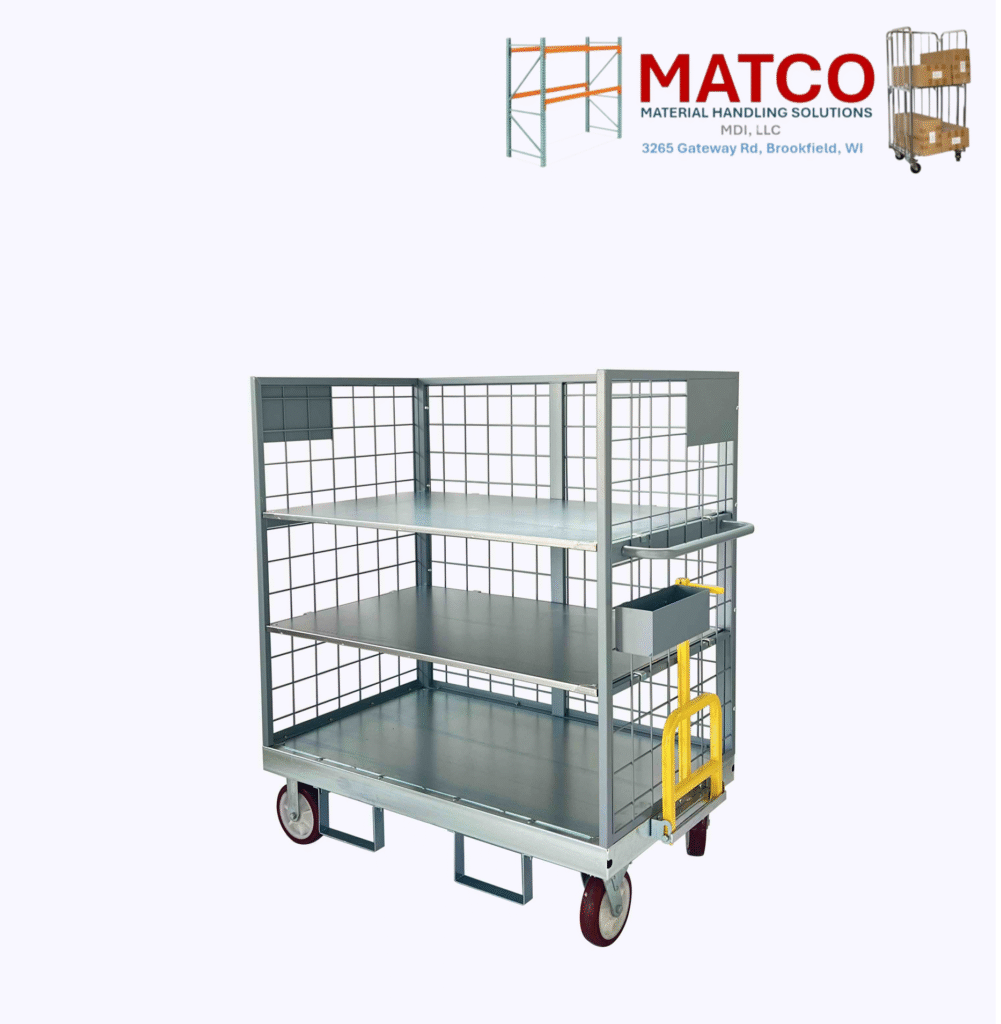
1. Picking Carts
- Description: Multi-shelf carts, often lightweight and maneuverable, built to hold multiple SKUs.
- Common Uses:
- Order fulfillment for e-commerce and retail distribution centers
- Batch picking multiple customer orders at once
- Kitting operations for manufacturing
- Why They Work: Picking carts reduce the number of trips needed and allow workers to process several orders simultaneously.
2. Platform Carts / Flatbed Carts
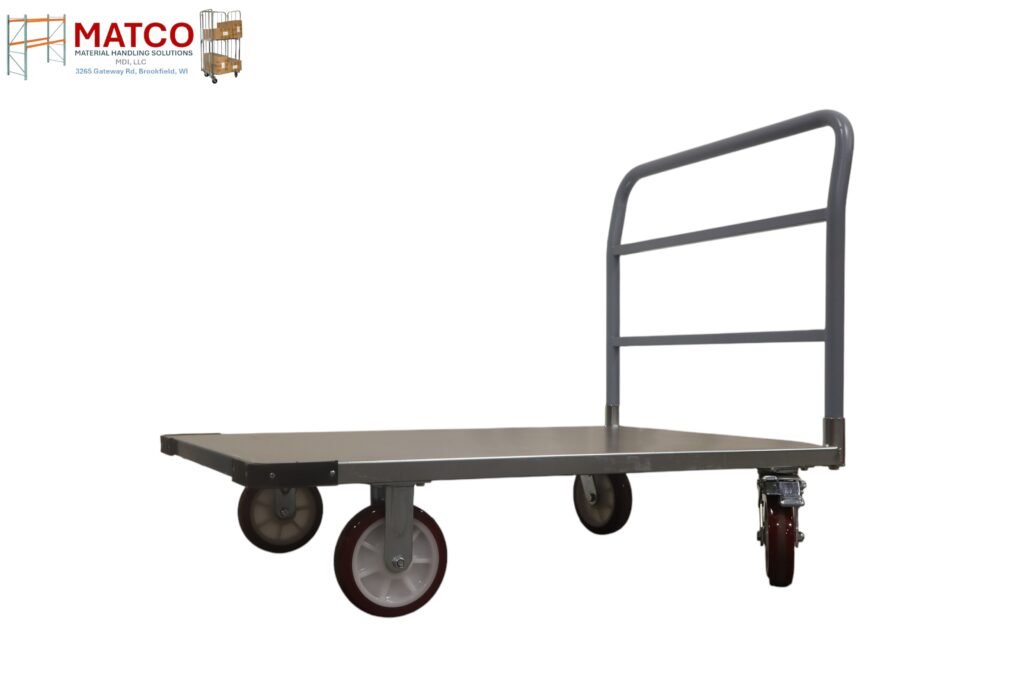
- Description: A flat surface (sometimes with side rails) used for heavy, bulky, or oversized goods.
- Common Uses:
- Moving pallets short distances
- Staging inbound/outbound shipments
- Handling cases or boxes that don’t fit in bins
- Why They Work: They’re rugged, simple, and versatile — true workhorses of the warehouse.
3. Shelf Carts
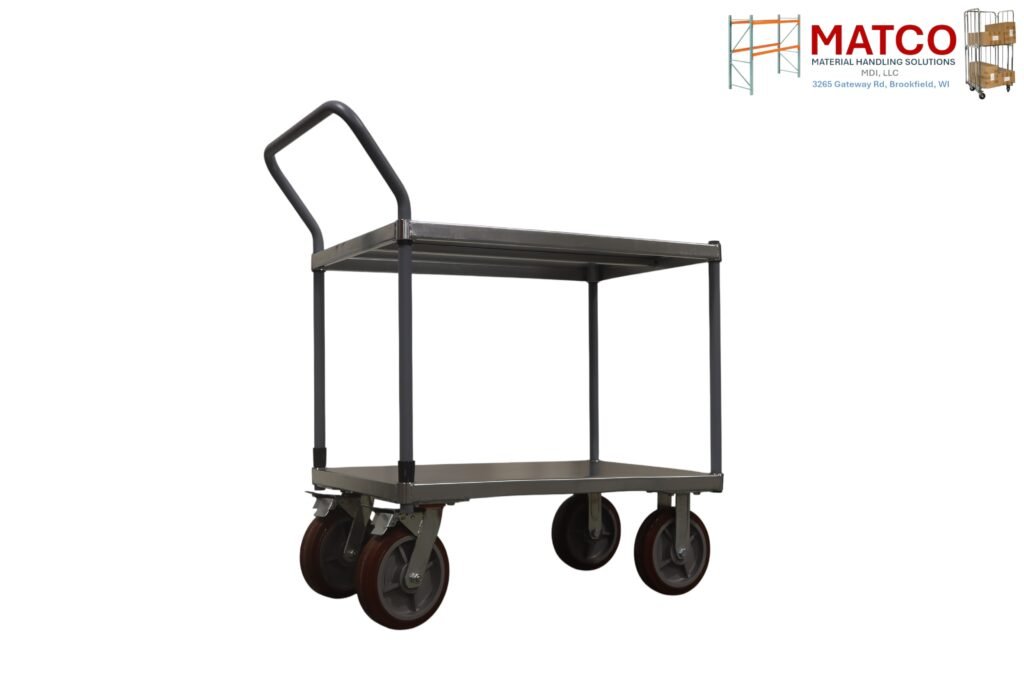
- Description: Multi-tier carts with two to five shelves, sometimes with bins or dividers.
- Common Uses:
- Organizing small parts
- Stocking shelves in retail environments
- Transporting tools and components in assembly areas
- Why They Work: Everything has its place, minimizing mis-picks and confusion.
4. Security / Caged Carts
- Description: Lockable carts with wire mesh or solid sides.
- Common Uses:
- Transporting electronics, pharmaceuticals, or other high-value goods
- Controlled storage within the warehouse
- Why They Work: Combines mobility with security.
5. Tilt / Gravity Flow Carts
- Description: Carts with angled or sloped shelves that use gravity to move items forward.
- Common Uses:
- High-volume parts picking
- “First In, First Out” (FIFO) inventory management
- Why They Work: Keeps products in easy reach and improves ergonomics for pickers.
6. Specialty / Custom Carts
- Description: Carts designed for unique applications, often built to order.
- Examples:
- Floral carts with vase holders
- Automotive part carts with dividers and padding
- Furniture carts with straps for stability
- Why They Work: They’re engineered for maximum efficiency in very specific workflows.
How to Choose the Right Warehouse Cart
Picking the right cart isn’t about guesswork. Consider these factors before you buy:
- Workflow Demands:
- Is your priority speed, security, or bulk handling?
- For order fulfillment, go with picking carts. For bulk transport, use platform carts.
- Product Size & Weight:
- Heavy-duty steel carts for oversized loads
- Lightweight aluminum carts for small-item picking
- Aisle Width & Facility Layout:
- Narrow aisle operations need slim carts with tight turning radius
- Wide-aisle setups can accommodate larger, bulkier carts
- Ergonomics:
- Avoid carts that require excessive bending or lifting
- Look for ergonomic handles and adjustable shelving
- Durability & Materials:
- Powder-coated steel for longevity
- Aluminum for easy maneuverability
- Future-Proofing:
- Modular or customizable carts that adapt as your operation grows
Common Mistakes to Avoid
Even the best warehouse cart won’t help if it’s misused. Avoid these pitfalls:
- ❌ Using a single cart type for every task
- ❌ Ignoring input from workers who actually use the carts
- ❌ Overloading carts beyond weight limits
- ❌ Buying low-quality carts that break down quickly
- ❌ Forgetting about safety features like brakes, bumpers, or straps
Benefits of the Right Cart Strategy
Implementing the right mix of carts can lead to:
- 🔹 Reduced labor hours — workers spend less time walking and carrying
- 🔹 Fewer injuries — better ergonomics lowers strain
- 🔹 Increased accuracy — organized carts reduce picking errors
- 🔹 Higher throughput — faster movement of goods
- 🔹 Lower total cost of ownership — carts last longer and save time daily
How Matco Supports Your Warehouse Cart Needs
At Matco, we’ve seen firsthand how the right material handling equipment transforms warehouse operations. That’s why we offer a full line of customizable warehouse carts designed to fit your workflow — not the other way around.
Our carts are:
- Heavy-duty: Built with reinforced steel for industrial use
- Forkliftable: Move them quickly when layouts change
- Customizable: From shelving configurations to specialty designs
- Durable: Powder-coated for long life in tough environments
Whether you’re running an e-commerce fulfillment center, a manufacturing facility, or a distribution warehouse, MatcoDist can help you find the perfect cart to improve productivity and safety.
👉 Ready to optimize your warehouse with better carts? [Schedule a consultation with MatcoDist today.]
Final Thoughts
Warehouse carts aren’t just “wheels and shelves.” They’re an essential part of modern material handling — tools that directly impact speed, safety, and profitability. Choosing the right carts for your operation is one of the fastest, most cost-effective ways to improve warehouse efficiency.
Invest in the right carts, and you’ll see results where it matters most: smoother workflows, happier employees, and healthier profit margins.